Mobile marketing automation enables businesses to send personalized, timely messages to users across SMS, push notifications, in-app messages, and mobile email. By leveraging behavioral triggers, segmentation, and multi-channel workflows, companies can improve engagement, boost conversions, and enhance customer retention. Automation reduces manual effort, ensures consistent messaging, and provides real-time analytics for optimization. Implementing the right platform allows businesses of all sizes to scale marketing efforts efficiently, drive better ROI, and succeed in a mobile-first digital landscape.
Mobile devices have become the primary way people interact with brands. With over 6.8 billion smartphone users worldwide, mobile marketing automation has shifted from a nice-to-have to an absolute necessity for businesses looking to stay competitive.
Mobile marketing automation allows businesses to deliver personalized, timely messages to customers through their mobile devices using automated workflows. This approach helps companies nurture leads, increase customer engagement, and drive conversions without manual intervention.
Understanding Mobile Marketing Automation
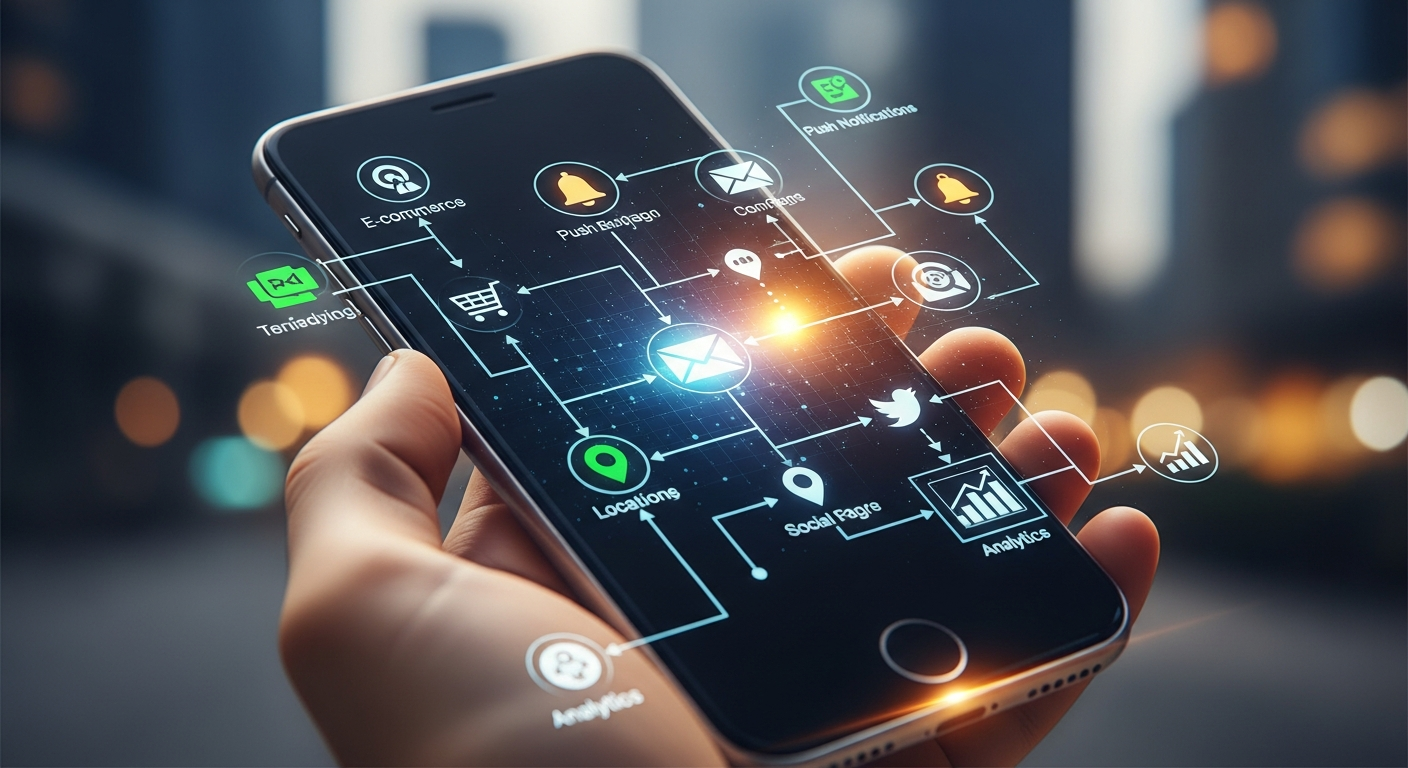
Mobile marketing automation refers to software platforms that automatically send targeted marketing messages to users’ mobile devices based on predetermined triggers and user behaviors. These services combine the power of automation with the immediacy and personal nature of mobile communication.
The technology works by tracking user actions and behaviors, then responding with relevant messages through various mobile channels such as SMS, push notifications, in-app messages, and mobile email. This creates a seamless, personalized experience that guides users through their customer journey.
Key Components of Mobile Marketing Automation
Behavioral Triggers: These are specific actions that prompt automated responses. Examples include app downloads, purchases, abandoned carts, or location-based activities.
Segmentation: Users are grouped based on demographics, behaviors, preferences, or other characteristics to ensure messages are relevant and targeted.
Multi-Channel Messaging: Automation platforms can send messages across multiple mobile channels, creating a cohesive user experience.
Analytics and Reporting: Real-time data tracking helps businesses understand campaign performance and user engagement patterns.
Benefits of Mobile Marketing Automation Services
Increased Engagement Rates
Mobile messages typically see higher open and engagement rates compared to traditional marketing channels. SMS messages have a 98% open rate, while push notifications can achieve engagement rates of 30-40% when properly targeted.
Personalization at Scale
Automation allows businesses to deliver personalized messages to thousands of users simultaneously. By leveraging user data and behavior patterns, companies can create highly relevant experiences that resonate with individual customers.
Cost-Effective Marketing
Automated campaigns reduce the need for manual marketing efforts, allowing teams to focus on strategy and optimization rather than repetitive tasks. This efficiency translates to lower costs per conversion and better ROI.
Real-Time Customer Support
Mobile automation can provide instant responses to customer inquiries, send order confirmations, and deliver important updates, improving overall customer satisfaction.
Enhanced Customer Retention
By staying connected with customers through timely, relevant messages, businesses can increase customer lifetime value and reduce churn rates.
Types of Mobile Marketing Automation
SMS Marketing Automation
Text message automation remains one of the most effective mobile marketing channels. SMS campaigns can include welcome messages, promotional offers, appointment reminders, and transactional notifications.
Common SMS automation workflows include:
- Welcome series for new subscribers
- Abandoned cart recovery sequences
- Post-purchase follow-up messages
- Event reminders and confirmations
Push Notification Automation
Push notifications allow businesses to communicate directly with app users even when the app isn’t open. These messages can drive re-engagement, promote new features, or deliver time-sensitive offers.
Effective push notification strategies include:
- Onboarding sequences for new users
- Behavioral triggers based on app usage
- Location-based notifications
- Personalized content recommendations
In-App Message Automation
These messages appear within the app interface and can guide users through specific actions or highlight important information. In-app automation helps improve user experience and increase feature adoption.
Mobile Email Automation
While not exclusively mobile, email automation optimized for mobile devices plays a crucial role in mobile marketing strategies. Mobile-optimized emails ensure messages display correctly on smaller screens and include mobile-friendly call-to-action buttons.
Choosing the Right Mobile Marketing Automation Platform
Essential Features to Consider
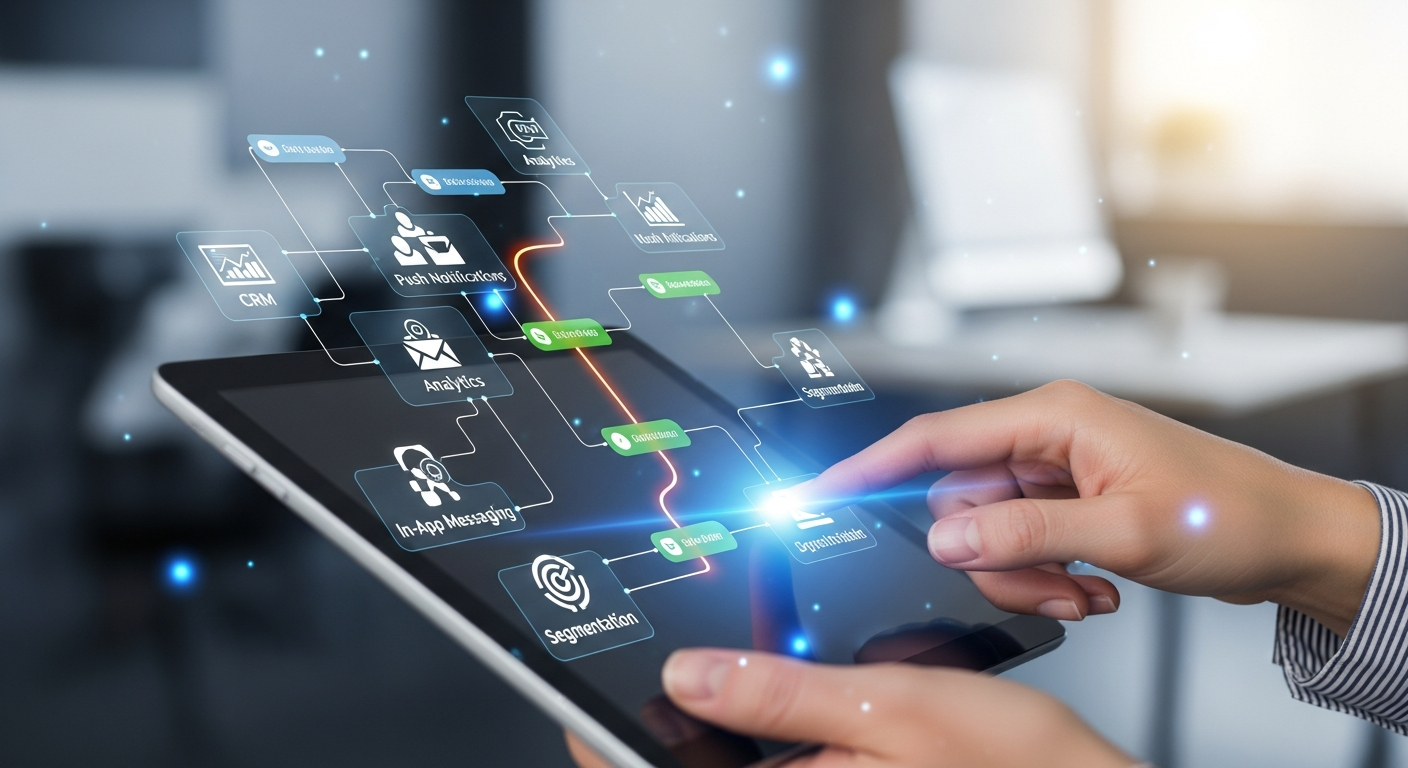
Multi-Channel Capabilities: Look for platforms that support SMS, push notifications, in-app messaging, and mobile email from a single interface.
Advanced Segmentation: The ability to create detailed user segments based on behavior, demographics, and preferences is crucial for effective targeting.
A/B Testing: Built-in testing capabilities allow you to optimize message content, timing, and delivery methods.
Integration Options: Ensure the platform integrates with your existing CRM, e-commerce platform, and analytics tools.
Compliance Features: Look for features that help maintain compliance with regulations like GDPR, CCPA, and TCPA.
Popular Mobile Marketing Automation Platforms
Several platforms lead the mobile marketing automation space, each with unique strengths:
Enterprise Solutions: These platforms offer comprehensive features and can handle large-scale campaigns with advanced customization options.
Mid-Market Options: Balanced platforms that provide robust features at a reasonable price point, suitable for growing businesses.
Small Business Tools: User-friendly platforms with essential automation features, perfect for companies just starting with mobile marketing automation.
Implementing Mobile Marketing Automation
Setting Up Your First Campaign
Define Your Goals: Start by establishing clear objectives for your mobile marketing automation efforts. Common goals include increasing app engagement, driving sales, or improving customer retention.
Identify Your Audience: Use customer data to create detailed user personas and segments. Consider factors like demographics, behavior patterns, and preferences.
Choose Your Channels: Select the most appropriate mobile channels based on your audience preferences and campaign goals.
Create Your Content: Develop compelling messages that align with your brand voice and provide value to recipients.
Set Up Triggers: Define the specific actions or conditions that will trigger automated messages.
Best Practices for Mobile Marketing Automation
Timing Matters: Send messages when users are most likely to engage. Avoid early morning or late evening sends unless your audience specifically prefers these times.
Keep Messages Concise: Mobile users have limited attention spans. Make your messages clear, concise, and action-oriented.
Personalize Your Approach: Use customer data to personalize messages beyond just including names. Reference past purchases, preferences, or behaviors.
Maintain Frequency Balance: Avoid overwhelming users with too many messages, but don’t let too much time pass between communications.
Test and Optimize: Continuously test different message variations, timing, and channels to improve performance.
Measuring Success in Mobile Marketing Automation
Key Performance Indicators
Open Rates: The percentage of recipients who open your messages provides insight into subject line effectiveness and audience engagement.
Click-Through Rates: This metric shows how many users take action after receiving your message, indicating content relevance and call-to-action effectiveness.
Conversion Rates: The ultimate measure of success, conversion rates show how many users complete desired actions after engaging with your messages.
Customer Lifetime Value: Track how mobile marketing automation impacts long-term customer value and retention.
Return on Investment: Calculate the revenue generated from your mobile marketing automation efforts compared to the costs involved.
Analytics and Reporting
Effective mobile marketing automation platforms provide comprehensive analytics that help you understand user behavior and campaign performance. Look for features like:
- Real-time campaign performance dashboards
- User journey mapping and funnel analysis
- Cohort analysis for retention tracking
- A/B test results and statistical significance
Common Challenges and Solutions
Low Engagement Rates
If your messages aren’t generating expected engagement, consider reviewing your segmentation strategy, message timing, and content relevance. Conduct surveys to understand user preferences and adjust your approach accordingly.
Compliance Concerns
Mobile marketing automation must comply with various regulations. Ensure you have proper opt-in procedures, provide clear unsubscribe options, and maintain detailed records of user consent.
Technical Integration Issues
Work with your IT team or platform support to ensure smooth integration with existing systems. Proper API connections and data synchronization are crucial for effective automation.
Message Fatigue
Prevent user burnout by implementing frequency caps, monitoring engagement metrics, and providing value in every message. Quality should always take precedence over quantity.
Advanced Mobile Marketing Automation Strategies
Behavioral Triggered Campaigns
Create sophisticated workflows that respond to specific user behaviors. For example, send a special offer to users who browse a product category multiple times without purchasing.
Geolocation-Based Automation
Use location data to send relevant messages when users are near your physical stores or in specific geographic areas. This strategy works particularly well for retail and restaurant businesses.
Predictive Analytics Integration
Advanced platforms can use machine learning to predict user behavior and automatically adjust messaging strategies. This approach helps identify users at risk of churning or those likely to make high-value purchases.
Cross-Channel Orchestration
Coordinate messages across multiple channels to create seamless user experiences. For instance, follow up an email with a push notification if the user didn’t engage with the initial message.
The Future of Mobile Marketing Automation
Mobile marketing automation continues to evolve with advancing technology. Artificial intelligence and machine learning are making automation more sophisticated, enabling better personalization and predictive capabilities.
Voice assistants and smart devices are creating new opportunities for mobile marketing automation. Businesses are exploring ways to integrate these technologies into their automation strategies.
Privacy regulations are also shaping the future of mobile marketing automation. Platforms are developing new features to help businesses maintain compliance while still delivering effective campaigns.
Taking Your Mobile Marketing to the Next Level

Mobile marketing automation services offer powerful opportunities to connect with customers, drive engagement, and grow your business. Success depends on choosing the right platform, implementing best practices, and continuously optimizing your approach based on data and user feedback.
Start by identifying your specific goals and audience needs. Then, select a platform that aligns with your requirements and budget. Begin with simple automation workflows and gradually expand to more sophisticated strategies as you gain experience and insights.
Remember that mobile marketing automation is not a set-it-and-forget-it solution. Regular monitoring, testing, and optimization are essential for maintaining effectiveness and achieving long-term success.
The businesses that embrace mobile marketing automation today will be best positioned to thrive in an increasingly mobile-first world. By delivering timely, relevant, and personalized experiences to customers’ mobile devices, you can build stronger relationships, drive more sales, and create lasting competitive advantages.
Conclusion
Mobile marketing automation empowers businesses to deliver timely, personalized, and multi-channel messaging to mobile users. By leveraging behavioral triggers, segmentation, and analytics, companies can increase engagement, drive conversions, and improve customer retention. Implementing automation efficiently ensures cost-effective campaigns, better ROI, and scalable marketing success in a mobile-first world.
Key Sections of Mobile Marketing Automation
1. Understanding Mobile Marketing Automation
Mobile marketing automation uses software to automatically send targeted messages to users’ mobile devices based on their behaviors and triggers. By combining personalization with automation, businesses can guide customers through their journey seamlessly. Channels include SMS, push notifications, in-app messages, and mobile-optimized emails. This enables marketers to increase engagement, nurture leads, and drive conversions without manual effort, improving efficiency and customer experience across all mobile touchpoints.
2. Behavioral Triggers for Automation
Behavioral triggers allow businesses to send timely, relevant messages based on user actions such as app downloads, purchases, or abandoned carts. These automated triggers ensure messages are delivered when users are most receptive. By leveraging behavioral data, marketers can create workflows that drive higher engagement, encourage repeat purchases, and improve overall customer experience while saving time and operational resources.
3. Segmentation for Personalization
Segmentation divides audiences into groups based on demographics, behavior, or preferences, enabling personalized messaging. Proper segmentation ensures that campaigns are relevant and resonate with users, increasing engagement rates. Automated platforms use segmentation to send tailored content, such as product recommendations or location-specific offers, making campaigns more effective and enhancing customer loyalty.
4. Multi-Channel Messaging Strategies
Effective mobile marketing uses multiple channels—SMS, push notifications, in-app messages, and mobile emails—to reach users wherever they are. Automation platforms synchronize messaging across channels to create cohesive experiences. Cross-channel campaigns maintain brand consistency, improve retention, and increase the likelihood of conversion by guiding users through the customer journey seamlessly.
5. Analytics and Reporting for Optimization
Mobile automation platforms provide real-time analytics, tracking open rates, click-through rates, conversions, and engagement metrics. Reporting tools help marketers identify successful campaigns, optimize underperforming messages, and understand user behavior. Advanced dashboards allow for cohort analysis, funnel tracking, and predictive insights, enabling continuous improvement in campaign performance.
6. SMS Marketing Automation
SMS campaigns remain one of the most effective mobile channels, offering direct communication with high open rates. Automated SMS workflows include welcome series, abandoned cart reminders, promotional alerts, and transactional notifications. Properly designed SMS automation improves engagement, boosts sales, and fosters stronger relationships with customers.
7. Push Notification Automation
Push notifications re-engage users even when apps are inactive. Automated notifications based on user behavior, location, or app usage increase retention and drive conversions. Strategies include onboarding sequences, personalized recommendations, and time-sensitive offers. Push automation enhances user experience while maintaining relevance and timely communication.
8. In-App Message Automation
In-app messages guide users within the app interface, highlighting features or promotions. Automation ensures users receive relevant prompts without manual intervention. In-app messaging improves feature adoption, reduces churn, and creates personalized experiences that encourage users to take specific actions within the app.
9. Mobile Email Automation
Mobile-optimized email campaigns ensure content displays correctly on smaller screens. Automated emails can include welcome messages, abandoned cart follow-ups, product recommendations, and newsletters. Personalization, concise content, and clear calls-to-action increase open and click-through rates, driving engagement and revenue effectively.
10. Compliance and Privacy Considerations
Mobile marketing automation must comply with regulations like GDPR, CCPA, and TCPA. Platforms provide features such as opt-in management, consent tracking, and unsubscribe functionality. Ensuring compliance protects brand reputation, avoids legal penalties, and builds trust with customers by respecting privacy preferences.
11. Advanced Strategies: Predictive and Geolocation-Based Campaigns
Modern platforms leverage predictive analytics and geolocation to target users intelligently. Predictive analytics identifies high-value users or those at risk of churn, enabling timely interventions. Geolocation-based messages offer contextually relevant promotions when customers are near a store or specific location, enhancing engagement and conversions.
12. Measuring Success and ROI
Success is measured by open rates, click-through rates, conversions, customer lifetime value, and ROI. Continuous analysis identifies trends, optimizes content, and refines workflows. Regular monitoring ensures campaigns remain effective, maximizing marketing impact while reducing costs and increasing overall revenue through data-driven insights.