

Mobile SEO ensures websites are fast, responsive, and user-friendly for smartphones and tablets. Optimizing UX, page speed, keywords, and local search drives traffic, conversions, and visibility, including mobile-focused NFT marketing success.
Given that over half of web browsing worldwide is now done on mobile devices, search engines have switched over to mobile-first indexing. For businesses, what does this mean? It means that the days of no mobile SEO are over. If your site is not designed for mobile use you’ll not gain either traffic or conversions.
The purpose of this blog is to set out what exactly mobile SEO is, why it should be your top priority, and how to ensure that your site is performing well on mobile for users everywhere. Get well ready to dominate the very top of search results on mobile devices and take your site to higher visibility than it’s ever seen before!
What Is Mobile SEO?

Mobile SEO (Search Engine Optimization) is the practice of ensuring that a website is optimized for mobile devices – such as smartphones and tablets – so that users have a seamless experience. This includes things like responsive design, fast loading times, user-friendly mobile navigation, and appropriate use of smaller screen styles.
Why is this important? Not only does Google have mobile-first indexing – they look at the mobile version of a website before considering its desktop counterpart. They also report this little gem: Over 60% of users will abandon a site which isn’t mobile friendly.
Whether you are a retailer selling things on the internet, a content creator, or offer your services to customers: without good mobile SEO you won’t be able to keep your audience’s attention.
Why Mobile SEO Matters
Mobile-First Indexing by Google
Since 2018 Google has heavily consulted guidelines. Google’s algorithms mainly use the mobile version of a site to rank and index now. If your mobile site isn’t up to snuff, your SEO rankings may not be either.
Mobile Usage Growth
As smartphones are becoming the preferred means for searching, shopping and browsing, Web traffic from mobile devices now constitutes 60.67 percent says Statista. If you ignore these markets then you could miss out on a big lot of potential revenue. Perhaps even most of it.
Importance of User Experience (UX)
A poorly thought-out mobile experience, such as slow load times or cramped layouts, can contribute towards an increase in bounce rates. The more visitors who leave your site after short periods signal to search engines that it isn’t offering value.
Higher Conversion Rates
When websites take mobiles into account, they produce more leads, sales and interactions too. Those who shop on a mobile phone – or use it as a reader for content – want freedom of access, fast loading times, smooth operation.
Fundamental Principles of Mobile SEO
Responsive Web Designs
What is it?
Responsive Web design makes sure your website changes as needed to fit any screen size.
How to implement it:
-
Use CSS to create fluid grids and flexible visual elements.
-
Regularly test your site using Google’s mobile-friendly testing tool.
Speed up Your Page
Mobile users won’t tolerate a slow-loading site. Even 1 second’s delay in mobile load times can reduce your turnover by up to 20%.
Tips for speeding up:
-
Compress pictures using TinyPNG or ImageOptim.
-
Enable browser caching.
Optimizing for Mobile Keywords
Mobile web search is different from desktop. Mobile users often use voice-activated search and natural, long-tail queries.
Mobile keyword optimization pointers:
-
Investigate long-tailed phrases (e.g., “good pizza nearby”).
-
Use question-based search phrases to mimic human queries.
Be Mindful Of Local SEO Techniques
Mobile searches are often location-specific, reminding us of the importance of local search engine optimization strategies.
Streamline Navigation
Best practices:
-
Keep menus minimalist.
-
Use large, easily tappable buttons for CTAs.
-
Avoid intrusive popups.
Structured Data
Structured data helps search engines understand your content and create rich results in mobile SERPs.
Examples:
-
Use schema.org markup for reviews, FAQs, events, etc.
-
Add structured data to product pages to show price/availability in search.
Measuring Mobile SEO Success
It’s not enough just to optimize; you must also measure performance.
Mobile SEO Tools That Are Needed

-
Google Search Console – Mobile-first indexing status, alerts.
-
PageSpeed Insights – Speed metrics and recommendations.
-
Mobile-Friendly Test – Check compliance with Google standards.
-
SEMrush – Mobile keyword tracking and performance analytics.
Metrics To Keep Track Of
-
Bounce Rate – A high bounce rate from mobile users suggests UX issues.
-
Mobile sessions – Track how much of your traffic comes from mobile.
-
Conversion rate by device – Are mobile visitors converting as well as desktop users?
Mobile SEO for the Future
Optimize Your Voice Search
Natural language and quick answers dominate voice search. Make sure your content reflects this trend.
5G and Accelerated Service Models
5G means near-instant load times. Implement Accelerated Mobile Pages (AMP) for better speed performance.
Mobile Video Content
Optimize video file sizes and use responsive video players to engage mobile audiences effectively.
Master Mobile SEO and Become Outstanding
Mobile SEO is not merely the mode-of-setting that current trends demand; it’s about being competitive, thriving in a digital ecosystem and moving forward. By using responsive design to tailor content to your user’s specifications in a way that angers them less, improving page load speed, and orienting your strategy to suit the behavior of mobile readers, you can make your site “stand-up” or even stand out more than ever before on search results pages.
Tools and a Regular Check
Make your mobile optimization smart exercise. Need help on this front? Take the Google Mobile-Friendly Test today. It is a big first step toward mobile SEO success!
Page Speed Optimization for Mobile
Mobile users expect instant results. Even a one-second delay can reduce conversions by up to 20%. Optimize images using tools like TinyPNG, enable browser caching, compress CSS/JS files, and leverage Content Delivery Networks (CDNs). Google’s PageSpeed Insights identifies opportunities to improve speed metrics. AMP (Accelerated Mobile Pages) can further boost load times. Faster websites increase user satisfaction, retention, and search visibility while reducing bounce rates.
Mobile Keyword Strategy
Mobile search differs from desktop, with users favoring long-tail and conversational queries. Optimize for voice search with natural phrases like “best pizza near me” or “affordable NFT marketplace for beginners.” Include location-specific keywords for local SEO. Mobile keyword strategies improve relevance, user engagement, and search visibility. Analyze search intent to ensure content aligns with the questions users ask while on mobile.
Local SEO for Mobile
Mobile users often search with location intent, making local SEO essential. Claim and optimize Google Business Profile, include consistent NAP (Name, Address, Phone) data, and add localized schema markup. Encourage positive reviews and optimize for “near me” queries. Local SEO increases foot traffic for physical businesses and boosts conversions for service providers targeting nearby customers.
Streamlined Navigation & UX
Simplify menus, use large tappable buttons, and minimize popups. Mobile UX should prioritize clarity, accessibility, and ease of use. Organize content hierarchically with visible CTAs. A clean, intuitive mobile interface reduces bounce rates, encourages engagement, and improves rankings. Regular usability testing helps identify pain points and ensures smooth navigation for all users.
Structured Data & Mobile SERP Enhancements
Structured data helps search engines understand content and display rich results. Implement schema for products, reviews, FAQs, and events. Rich snippets increase click-through rates (CTR) on mobile SERPs, giving your site higher visibility and credibility. Use JSON-LD markup and validate with Google’s Rich Results Test. Mobile users benefit from clear, informative search snippets that encourage engagement.
Measuring Mobile SEO Performance
Track mobile SEO using Google Analytics, Search Console, and SEMrush. Monitor bounce rates, session duration, mobile conversion rates, and click-through from mobile SERPs. Use PageSpeed Insights for performance tracking. Data-driven insights allow adjustments in UX, content, and technical SEO to enhance rankings and conversions. Regular audits ensure long-term mobile SEO success.
Mobile SEO & NFT Marketing
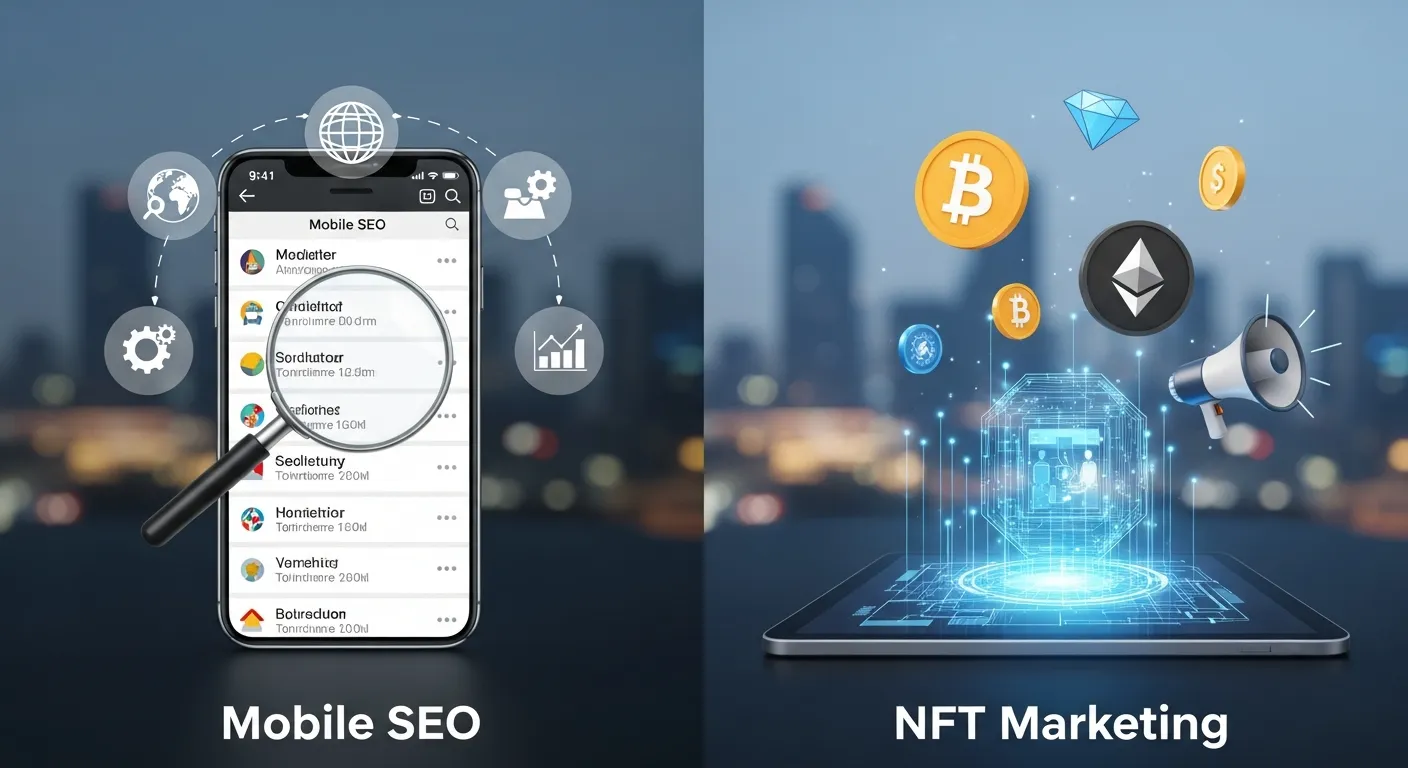
NFT projects rely on mobile traffic, especially from Web3 Marketing accessing marketplaces via smartphones. Mobile SEO ensures NFT websites, marketplaces, and blogs are fast, readable, and discoverable. Optimize NFT landing pages, product descriptions, and community content for mobile search. Leverage long-tail keywords like “buy limited edition NFT art on mobile” and integrate structured data for NFT listings to improve visibility and collector engagement. Mobile-optimized NFT platforms boost user retention, secondary market activity, and social sharing, driving higher long-term revenue.
Future-Proofing Mobile SEO
Prepare for trends like 5G, voice search, and mobile-first video consumption. Optimize content for mobile video, structured snippets, and conversational queries. Ensure compatibility with emerging mobile technologies. Continuous testing, optimization, and adaptation maintain competitiveness, allowing your website to dominate mobile search rankings for years to come.
Conclusion
Mobile SEO is no longer optional—it’s a critical component for businesses aiming to thrive in today’s digital landscape. With over half of global web traffic coming from smartphones and tablets, optimizing your website for mobile ensures not only higher search engine rankings but also better user experiences that keep visitors engaged. Effective mobile SEO involves responsive design, fast loading speeds, intuitive navigation, and mobile-focused keyword strategies. Additionally, it incorporates local search optimization, structured data, and mobile-friendly content to capture high-intent traffic. By prioritizing mobile SEO, businesses can increase conversions, reduce bounce rates, strengthen brand credibility, and achieve long-term sustainable growth, all while staying competitive in an increasingly mobile-first world.
FAQs
What is mobile SEO?
Mobile SEO is the process of optimizing your website to perform seamlessly on smartphones and tablets. It involves responsive design, fast page loads, and user-friendly navigation to enhance visibility, engagement, and search rankings across mobile devices.
Why is mobile-first indexing important?
Google now prioritizes mobile versions of websites for indexing and ranking. If your site isn’t optimized for mobile, search engines may rank it lower, resulting in reduced organic traffic and lost opportunities.
What is a responsive website?
A responsive website automatically adjusts layouts, images, and content to fit screens of all sizes. This ensures visitors have a consistent and intuitive experience whether they are on a smartphone, tablet, or desktop.
Do page speeds affect mobile SEO?
Absolutely. Mobile users expect near-instant load times, and even a one-second delay can increase bounce rates and reduce conversions. Faster-loading pages are favored by search engines, improving rankings and user satisfaction.
How are mobile keywords different from desktop?
Mobile keywords often reflect natural language and voice search queries, including longer-tail phrases like “best NFT marketplace for beginners.” Optimizing for these queries captures the intent of users searching on-the-go.
Is local SEO necessary for mobile users?
Yes. Many mobile (SEO) searches include location intent such as “near me” or city-specific queries. Local SEO ensures businesses appear in maps, local search results, and mobile directories, increasing foot traffic and sales.
Do structured data and rich snippets help mobile SEO?
Structured data allows search engines to understand your content better and display rich snippets in mobile SERPs. This increases click-through rates, trust, and visibility for products, services, and content.
How do I track mobile SEO success?
Track mobile-specific metrics using tools like Google Analytics, Search Console, PageSpeed Insights, and SEMrush. Focus on mobile bounce rates, session duration, conversions, and engagement to measure performance accurately.
Can mobile SEO improve conversions?
Yes. Optimized mobile experiences enhance usability, reduce friction, and guide users to take action, whether purchasing, signing up, or exploring content. Good UX directly influences lead generation and sales.
Does mobile SEO matter for NFT projects?
Absolutely. NFT marketplaces and projects often rely on mobile traffic from collectors and communities. Mobile optimization ensures fast loading, clear display of assets, and higher engagement, ultimately boosting sales and secondary market activity.
How often should I audit mobile SEO?
Conduct mobile SEO audits at least quarterly to monitor performance, fix issues, and adjust strategies. Regular audits prevent ranking drops, improve UX, and keep your site aligned with the latest Google algorithm updates.
Is mobile optimization a long-term strategy?
Yes. With mobile usage continuing to grow, ongoing optimization ensures your website remains competitive. Regular improvements in speed, content, design, and technical SEO sustain visibility, engagement, and revenue.